
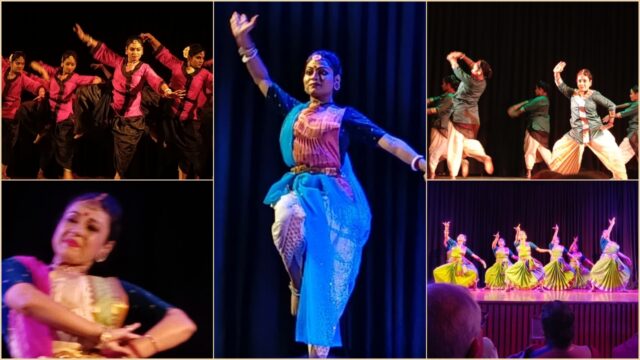
Dilip Guha, New Delhi: South Kolkata Nrityangan, one of Kolkata’s leading Bharatanatyam institutes, presented two compelling dance productions—Antarātma and Rangiye Diye Jao—at the prestigious CD Deshmukh Auditorium, India International Centre, New Delhi, on April 18, 2026. Organised by Impresario India, the evening drew an appreciative audience of art connoisseurs. Seamlessly blending tradition with innovation, the performances reflected the institute’s artistic depth and evolving creative vision.
Antarātma: A Journey Through Navarasa and Tagore
The opening presentation, Antarātma, unfolded as a deeply evocative exploration of the human spirit. Rooted in the classical grammar of Bharatanatyam and interwoven with the timeless poetry and music of Rabindranath Tagore, the production offered a nuanced interpretation of the nine rasas described in the Natyashastra.
Conceived, choreographed, and directed by Jhinook Mukherjee Sinha, with script and narration by Samya Karpha, the production drew strength from soulful recordings by Jayati Chakraborty, Rohini Roychowdhury, and Shounak Chattopadhyay. Each rasa—Shringaar (Love), Adbhutam (Wonder), Karuna (Compassion), Hasya (Joy), Raudra (Fury), Veera (Courage), Bibhatsam (Disgust), Bhayanakam (Fear), and Shantham (Peace)—was brought alive with expressive precision, revealing the emotional spectrum and inner landscapes of the human experience.
Rangiye Diye Jao: A Poetic Celebration of Spring
The second presentation, Rangiye Diye Jao, emerged as a lyrical ode to spring, envisioned not merely as a season but as a transformative presence. The production personified Spring as a radiant and enigmatic prince, whose arrival awakened nature and stirred dormant emotions.
Through graceful movement and evocative storytelling, the choreography captured the essence of renewal—buds blossoming, winds softening, and hearts opening to new possibilities. The performance resonated with vibrancy and poetic charm, offering a refreshing contrast to the introspective depth of Antarātma.
As the world approached World Dance Day, the performers reflected on dance as a universal language—one that transcends boundaries, preserves heritage, and fosters emotional connection.
The evening, marked by artistic excellence and emotional resonance, reaffirmed the enduring relevance of classical dance in contemporary cultural discourse. South Kolkata Nrityangan’s presentation stood as both a celebration of tradition and a testament to the transformative power of art.