
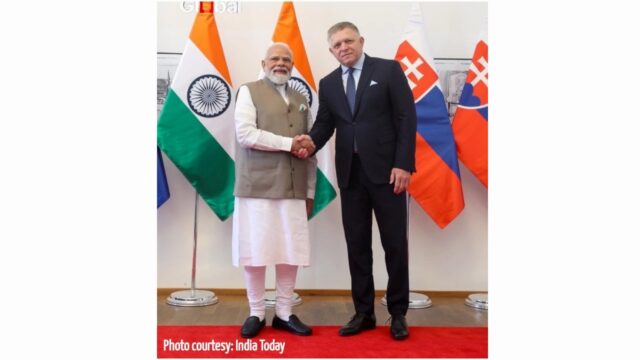
PARTHA ROY, KOLKATA: Prime Minister Narendra Modi’s landmark first-ever visit to Slovakia has spotlighted the rapidly deepening economic and trade partnership between India and this key Central European nation. Bilateral trade has surged dramatically in recent years, driven by strong growth in automobiles, auto components, pharmaceuticals, mobile phones, and machinery.
Slovakia, a major European auto manufacturing hub, benefits from Indian investments such as Tata Motors’ Jaguar Land Rover plant. Other notable Indian presences include TCS, CK Birla Group’s Kinex Bearings, Dhoot Transmission, and Amara Raja. India exports pharmaceuticals, footwear, garments, and auto parts, while importing vehicles, machinery, and industrial equipment from Slovakia.
The Indian diaspora in Slovakia, numbering around 9,200 workers, plays a vital role. Many contribute to IT, automotive manufacturing, warehousing, logistics, and research. A smaller community of Overseas Citizens of India runs small and medium enterprises like Indian grocery stores, restaurants, textile trading, and ethnic handicraft businesses. These ventures foster cultural exchange and introduce Indian cuisine and products to Slovak consumers.
Future prospects appear highly promising under the India-European Union Free Trade Agreement. The FTA is expected to further reduce barriers, boost investments, and facilitate labour mobility for skilled Indian professionals in IT, engineering, and services. This aligns with Slovakia’s labour needs and India’s demographic strengths, potentially accelerating trade in green technologies, AI, defence, and renewable energy.
During the visit, agreements on digital technology, labour mobility, and defence cooperation were advanced, elevating ties to a Comprehensive Partnership. As both nations eye deeper integration, Modi’s visit signals a strategic bridge between India’s growing economy and Europe’s industrial heartland, promising mutual prosperity and enhanced people-to-people links.